UK & Eire Natural History Bloggers
Showing posts with label News. Show all posts

Wednesday, 1 August 2012

A great new idea.

  
Hello everyone! sorry my latest blog has taken longer to publish than expected but from now on everything will be back to normality at least as far the regularity of publishing blogs goes, the same can't be said for some of my adventures!
   This blog by highlights the work of wildlife enthusiast Nadav Ossendryver. He runs a real time website on behalf off Kruger National Park giving updates on the most recent animal sightings with information including numbers of species and their location. The idea first came as a result of becoming frustrated with having to ask his parents to ask fellow wildlife observers where the best sightings were.
   Ossendryver now arrives at Kruger before the park opens and updates his site as well as sending out additional updates via Blackberry messenger, Twitter and Facebook. The site also has contact details for reporting Rhino poaching an ever-increasing problem. With a following of 18,000 people his work has now attracted the attention of Google who are looking for ways to commercialise his idea. Having been made South Africa National Park's first honorary virtual ranger he speaks of his clear love for the park and the wildlife "I love everything about the game reserve. You can go 1,000 times and never see the same thing. I could spend all day there, but not all day on the beach"


  Full story here-http://apps.facebook.com/theguardian/world/2012/jul/30/wildlife-tracker-south-africa

   Thank you to Mathew Button for bringing this to my attention.


http://cybercapetown.com/Maps/KrugerNationalPark/

     Ideas like this could well become the future of wildife watching, however as you will see in my next blog sometimes the best sightings can come completly out of the blue untill then all the best, George.

Monday, 25 June 2012

Wildlife News.

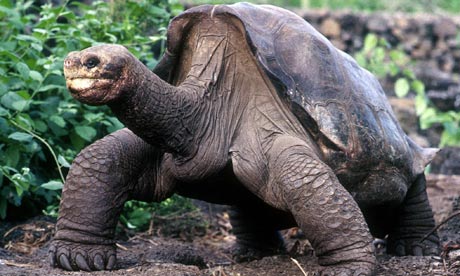
  In the first of my monthly wildlife news stories, which have caught my attention, there really is only one place to start. The sad news has very recently broken that Lonesome George, the last of the Pinata giant tortoises has died aged 100 making the species now officially extinct. Famous for his lack of interest in breeding despite repeated efforts to encourage him to do so, George was discovered by a park ranger on Sunday morning where it became clear his life cycle had run full circle. George was a huge attraction for tourists and became a symbol of the Ecuadorian Galapagos islands, which it was estimated had 180,000 visitors last year. After a post mortem to discover a cause of death, there are possible talks about embalming George's body to display in the Galapagos National Park for future generations to view. Surely a fitting tribute to an iconic and charismatic animal.
Visit the Telegraph online for the full story.


Image taken from http://static.guim.co.uk/sys-images/Guardian/Pix/pictures/2009/7/22/1248256019842/Lonesome-George-001.jpg.

I was recently pleased to read that a young Kenyan herder, Richard Turere, has devised a
possible solution that could well benefit both wildlife and people. By flashing LED lights around his livestock, he has for the past two years successfully deterred Lions from  predating on his cattle and other domesticated animals. Such is the success that he on  a personal level has had  that the idea is now being investigated on a greater scale to see if it has an impact on the number of clashes between people and wildlife. As it seems Lions associate lights around the cattle with activity and people, it would seem that not only do the lights restrict the Lions activity through fear of people, the lights also affect their night vision and so avoid lights whenever possible. There is a fear of Lions becoming habituated to this however with 100 of the country’s 2000 Lions being killed each year in acts of retribution by farmers because of lost live stock. It would seem this new deterrent could well become vital in the long run for both humans and Lions.


Image taken by author


And the third story that grabbed my attention today is a story which allows room for speculation. Costa Rica's Jaguars it has been discovered are rapidly changing prey preference to Green Turtles. Between the years of 2005 and 2010 it has been recorded that Jaguars killed 672 Green Turtles. At present it is unclear why this prey switch has happened.


Source BBC Wildlife July Edition.


                            Available at http://www.sciencephoto.com/image/387627/530wm/Z9340252-Jaguar-SPL.jpg

                            A brief thought from myself.

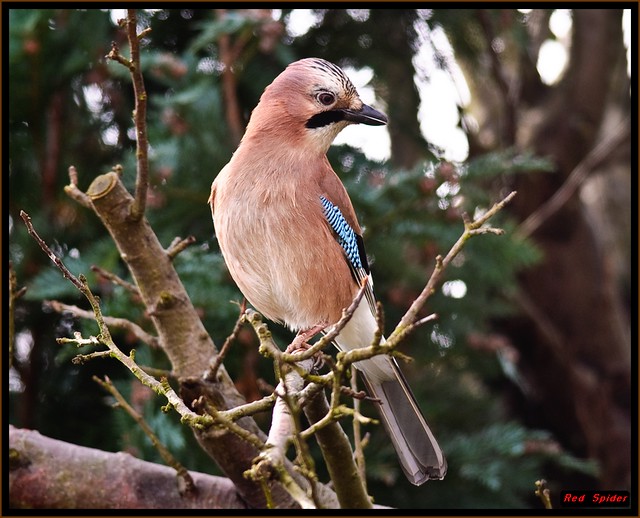
For the first time in a number of years I saw a Jay in the back garden of our home.  It is a strikingly beautiful bird which is becoming an all too rare sight. It really brought a smile to my face as it foraged for an estimated 20 minutes before moving off perhaps in search of a tastier meal. Perhaps a predator I had not seen had come into view, either way it was fantastic to see such a charismatic bird again after such a long absence.


Available at http://farm3.staticflickr.com/2743/4391407857_a09c437046_z.jpg?zz=1.

Bye for now George.