UK & Eire Natural History Bloggers
Showing posts with label Big cats. Show all posts

Friday, 25 January 2013

Jaguars, Madagascars Mighty Mitsinjo and a little from myself.

Hello and welcome to the long overdue latest edition to my blog, I hope you had a fantastic Christmas and New Year. Time has been limited with the strain of preparing for exams taking its toll and therefore my priorities have had to be academic, but I am back now and hopefully this edition will be worth the wait. We are lucky to have a guest article written by Matt Ward on Madagascars Mighty Mitsinjo, which resolves around the amphibian crisis and the work being done to try and save them, Matt is extremely knowledgeable on the subject having himself travelled to Madagascar and has also given many lectures around England on the subject, needless to say his report is well worth a read. Other sections include my observations on anything involving the natural world and the ten facts on this time focuses on one of the biggest but also one of the most elusive members of the cat family, the Jaguar, as ever I hope you enjoy the blog.

                                                      Ten facts on : Jaguar Panthera onca

1) The very name Jaguar originates from the native Americans word Yaguar, which translated means "he who kills with one leap".

2  Jaguars break the trend from many other cat species as a result of their tolerance of water, in fact Jaguars are excellent swimmers and will even do some of their hunting in water.

3 The diet of the Jaguar is widely varied, prey species include ;Fish, Turtles, Caimans, Birds,Deer, Peccaries, Capybaras, and Tapirs.

4 The range of the Jaguar has significantly decreased over time, once found to roam from the southern tip of America right down down to the northern end of the region surrounding the U.S -Mexico border, nowadays however the only large populations of the species can be found in small regions of Central and South America in particular the Amazon basin.
 
5 The major threats facing Jaguars include habitat destruction, which then has a knock on effect to how Jaguars hunt as they are sometimes forced to encroach onto cattle ranchers land, sometimes taking their livestock. This then leads to conflict as the cattle ranches retaliate. Jaguars are also persecuted for their beautiful fur, which has played a huge part in the decline in their population.

6_ Jaguars are closely related to Leopards Panthera pardus, however they are both heavier and sturdier than them, and it has been said that Jaguars have the most powerful bite out of all the big cat family.

7 Like fingerprints are unique to humans the rosettes which appear on the Jaguars fur coat are also identical to them, this helps to provide excellent camouflage. It has been noticed that Jaguars who inhabit denser rainforest, tend to be be both smaller and size and darker in colouration than individuals who prefer to spend greater amounts of time in more exposed, open areas.

8) Male individuals territories may overlap with numerous females, however they are fiercely territorial with other males. Marking of their territories may be done through three main ways of defining the borders of their territory to potential intruders through scent marking, visual signals such as scratching on trees and through vocal communication.

9 Cubs are usually born between the months of December and March however it is not unusual for them to be born at other times of the year. Usually the number of young born is two to three and are born blind. Just after  two weeks  they open their eyes for the first time and rely on their mother solely to provide them with food for the first six months of their lives, after which they will start to follow their mother on hunts. It will take at least another six months however for them to start to look for a territory of their own.

10) The Jaguar is listed by the IUCN as a species which is threatened in its surrounding environment, it is estimated there are 15,000  thousand wild individuals left prowling the rainforests.


http://www.google.co.uk/url?sa=i&rct=j&q=&esrc=s&frm=1&source=images&cd=&cad=rja&docid=5WaCx-aZJWWlXM&tbnid=tmrVFk6js3mfpM:&ved=0CAQQjB0&url=http%3A%2F%2Fanimals.nationalgeographic.com%2Fanimals%2Fmammals%2Fjaguar%2F&ei=VMYCUajwMoSp0AWZ0YCwCQ&bvm=bv.41524429,d.d2k&psig=AFQjCNGAA9JccWGi4LP-DawX30rMFFydVQ&ust=1359222732107378
All facts in this section were originally sourced from : a-z animals and National Geographic.


                                                           Madagascars Mighty Mitsinjo - By Matt Ward

In the town of Andasibe, Madagascar, there is a new facility built in 2011 for the protection of the countries extremely rare amphibians. The Mitsinjo (Mit-sin-zoo) association, meaning community in local Betsimasarek language, was born from the desire of local people wanting to conserve the wildlife of the rainforest that the government wasn’t prepared to and the influence of some western scientists with the drive to help. After the purchase of some land and a few years of guiding tourists a German conservation called Rainer Dolch helped the association to improve their conservation work by starting the reforestation of large empty patches of land with natural primary forest trees grown in their own nursery. In 2011 however more foreign scientists were brought in to help the association with the protection of their local amphibians. Whilst the local guides were very knowledgeable about how to find these species they didn’t have the biological knowledge of how to keep them or recognise when they were under threat.

For the past 50 years a killer fungus has been spreading across the globe killing all amphibians in its way and the spread has sped up in the past two decades. This fungus called Bataracachytridium dendrobatidis (Chytrid for short) is found in every country with amphibians except for 3, one of which is Madagascar. Due to the aquatic lifestyle of the fungus, its hyper aggressive spread speed and its contagiousness if it was to get into the rainforest of Madagascar it would almost certainly cause catastrophic damage and kill at least 80% of the national population.  This is one of the reasons that the global conservation group the Amphibian Ark helped to initiate the installation of an amphibian conservation centre in Madagascar. Madagascars wildlife is under massive threat from destruction of habitat and illegal poaching and the threat of a fatal fungus could push the frogs (Madagascars only amphibian order) over the edge, 98% of which are endemic and many are even locally endemic to areas of only a few hundred hectares.

DSC_0226.JPG

At the end of 2010 construction started on the facility in the heart of the rainforest with the idea being a three roomed concrete laboratory. The construction was finished in May 2011, with one room designated for the rearing of frog food (3 cricket species and fruit flies), one room to be a breeding room with terrariums for the frog populations and a quarantine room for new animals, research, hatching and sick animals. A team of 7 local technicians were trained by some of the world’s amphibian experts in the building of terrariums, breeding of live prey and monitoring frog behaviour to detect disease and stress. After 2 weeks of the building being completed the first populations to be introduced were all local, non-endangered species, in order to develop a smooth operating system and help train the native technicians. After only 4 weeks with the initial stock of 5 species, 4 of them had produced egg clutches with all females laying. The tadpoles were then used in a research project to identify the best food source to increase survivorship and vigour. After a few months in operation the government then announced that they had sold a large part of forest to the mining company and therefore were going to have to relocate some frogs which came into the new Mitsinjo facility. This turned out to be 140 critically endangered Golden Mantella, a species only found in 4 areas of the eastern rainforest marshes. Although the facility was fairly new they took on the new population and are now successfully breeding them with intent to release back into the wild upon location of ideal habitat. The association also do bi-annual disease surveys to try and find any cases of chytrid before it is too late and also population surveys to keep up to date information on the wild species. Thanks to the rapid expansion of the Mitsinjo associations conservation work and their collective knowledge and experience of the countries wildlife they have made lots of influential friends. Including being used by the BBC multiple times, ITV, National Geographic, Arkive and a host of zoos around the world including Durrel and Henry Dorley Omaha and being recognised by the conservation organisations in awards for their work against the destruction of this biodiversity hotspot.
 DSC_0246.JPG
                                                A final word from myself.

Make sure you give the bird life in your back garden all the help you can to get through the cold winter your help will make a big difference to their fortunes. If your patient enough you could be rewarded with some wonderful sightings, two of note in our own garden include a pair of Blackcaps Sylvia atricapilla ( males and females can be easily distinguished between by the colour of their caps as the name suggests, the males is black while the females is a lovely looking chestnut colour).  The other stand out sighting recently was a striking looking Bullfinch Pyrrhula pyrrhula , which I was disappointed to miss out on seeing as they are one of my favourite garden birds.
Has anyone been  watching the rather spectacular new wildlife series on the BBC "Africa" ? Personally one of my highlights of the series so far has to be the amazing scenes of Agama Lizards Agama agama, hunting flys on the backs of Lions Panthera leo! amazing television and of course narrated by Sir David Attenborough, always makes a series extra special, will there ever be someone  who equals his endless list of achievements? probably not.
That's it for this week I hope you enjoyed it and keep an eye out next Friday, for the next edition as from now on I am back to a normal schedule!
Have a great weekend,
George.

Saturday, 27 October 2012

Where it all began and the plight of the Amur Leopard.


Hello everyone and welcome to my latest blog. I hope you all had a good week and are enjoying the weekend even if the temperatures have noticeably dropped! This week I look back on where my fascination of the natural world began as well as taking a look at the struggles of a species of particular fondness to myself, the Amur Leopard, as always I hope you enjoy reading about it.

In the Beginning.
.
It's hard looking back to remember exactly what triggered my fascination with the beauty of the natural world, all I know is from a very young age if it walked, crawled, flew or swam I was fascinated by it. On top of this I had an obsession for fossils in particular those of Dinosaurs (an interest which has yet to leave me and doubt it ever will). However as finding real fossils was a highly unrealistic aim for a child of my age, I instead took great delight in trips to the Natural History Museum and other scientific establishments, which gave me an opportunity to get up close to some quite unbelievable sights. These trips often ended in a trip to the gift shop and this would be another highlight of my day as I could often be seen clutching proudly a new model dinosaur.
Birds played the biggest part however in engaging me in the natural world and, at the age of six one Christmas I was presented with a bird table which provided years of happiness as various species ranging from the ever reliable robins, starlings and various members of the finch such as the green and tit family’s such as the blue came to visit. Occasionally rarer species such as the Lesser Spotted Woodpecker or Goldcrest would come to visit the garden and if we were lucky land and feed on the bird table prompting scenes of excitement in the house as everyone strained for a better view. Sadly however frequent battering from the weather and the less than subtle Rooks and other larger bird species which persisted on landing on the bird table to feed despite their struggles to balance properly meant that eventually my bird table needed to be replaced, but I will always remember those early days and forever be thankful for that bird table and the happiness it brought to all.
As I have grown older I have continued to grow though phases of being almost obsessive in my fascination for particular groups of species. As previously mentioned dinosaurs and birds in general (later specifically becoming birds of prey) were the early stages of my appreciation and understanding of the species we share the planet with. Later just some of the groups of animals, which particulary caught my imagination, included: snakes (in particular venomous), sharks, big cats and large herbivores. Of course my appreciation for the entire natural world would never diminish and as I did then I still get as much enjoyment reading about or watching any animal however big or small they may be.
Of course world famous and hugely inspirational figures also played a huge role in  my education and understanding of what surrounds us. Sir David Attenborough doubtless an inspiration to everyone involved in working in the natural world and even those who are not was and still is a regular on the television screen in our household as were other figures such as Jonathan Scott and Simon King two of the main presenters to one of my favourite programmes growing up Big Cat Diary. Steve Irwin was another who despite his sometimes controversial methods behaviour did a huge amount in educating people about animals they may other wise not get to see and as a result never get to properly understand. He also did marvellous work in educating the public and helping ease their fears about potentially dangerous animals and as a result his programmes were always looked forward to.
It was television, which provided my brother and myself with a brief moment in the media spotlight. We took part in a starling survey organised by Blue Peter and sent out results in thinking nothing more of it apart from playing a small part in some important research. A couple of weeks later a message left on our answer phone asked for a picture of each of us to be sent in. We were then sent a Blue Peter badge and a signed photo of the presenters while our picture briefly aired on screen to millions of people as reward for taking part in the survey!
As I have grown older I have been lucky enough to have the opportunity to become more and more involved in conservation as well as being given the chance to study something I love. I have been fortunate enough to visit the beautiful country of South Africa (which I am returning to next year) as well as now studying a Bsc in Applied Zoology. When I look back I have a lot to be grateful for, the huge box of plastic animals may no longer take pride of place in my room, but they still remain in the house and serve as a reminder of the patience shown from my family, as I insisted on visiting the same places time and time again and picking up a collectible along the way! One thing I know for certain my love for the natural world will never leave me.


I always loved spending time here!
http://www.google.co.uk/imgres?um=1&hl=en&sa=N&biw=1024&bih=515&tbm=isch&tbnid=GfnvptXy6Y_LIM:&imgrefurl=http://www.london-attractions.info/natural-history-museum.htm&docid=oPv9VgtOTfcaFM&imgurl=http://www.london-attractions.info/images/attractions/natural-history-museum.jpg&w=460&h=288&ei=QUqMULPKJPKY0QX81ICwCw&zoom=1&iact=rc&dur=78&sig=102914425864501052659&page=1&tbnh=116&tbnw=186&start=0&ndsp=10&ved=1t:429,r:3,s:0,i:146&tx=71&ty=33


                                               The Struggle of the Amur Leopard.


The Amur Leopard is on the brink of extinction. I can't think of a way it can be put any differently that will make it's situation sound any less desperate. With an estimated 35 individuals left in the wild and most of these found in a 5,000 sq Kilometer area between the Vladivostok and the Chinese border with a few individuals living in the Jilin and Heiongjiang provinces of NE China with the possibility of a small number also living in North Korea. It makes me very sad to think how their situation has been allowed to get so bad. It is little wonder they are the most endangered big cat in the world.
The threats that face these beautiful cats are sadly similar threats, which threaten so many species all over the globe. Loss of habitat due to deforestation, forest fire and the increased demand in areas for agriculture mean their natural habitat has been seriously diminished.  Their natural prey species such as Sika Deer being over hunted forces them to turn to other prey sources, and if they are in short supply brings them into conflict with people in search of livestock, which inevitably, ends poorly for the Amur Leopard more often than not. The threat, which makes my blood boil the most, however is the persecution of these animals for their magnificent fur coats and their bones for tradiitonal Asian medicines.
Through WWF however efforts are being made to try and save this charismatic species before we lose them forever resigning yet another animal to the history books never to be seen by future generations.
   By working with groups of people such as regional authorities, the goverment and local communities in       the small area of remaining prime Amur Leopard habitat of the Amur - Heilong region, valauble work such as attempting to replenish numbers of suitable prey animals, increasing protected areas and clamping down harder on illegal logging. And this leads me to why these beautiful animals have such personal importance to myself. Over the last 18 months, I have had the priveledge of knowing that somewhere out there is an Amur Leopard I have adopted. I recieve regular updates about how "my " Leopard is doing as well as general news on the progress WWF are making in their conservation efforts. It feels great to know in some small way I am helping to contribute towards their plight improving. Let's just hope one day we can all look back and say what a fantastic success story!
https://support.wwf.org.uk/adopt-a-leopard Here is the link if anyone would like to know more or is interested in adopting :)

Amur leopard
A truly beautiful animal. Image taken from WWF

That's it for this week everybody I hope you enjoyed it, enjoy what is left of the weekend and I will be back next week,
all the best George.

Thursday, 30 August 2012

Acrobatic Bats, The Essex Lion and Black and Yellow Chaos.

 
As the sun sets and darkness begins fall, mysterious animals of the night wake from their slumber and begin their activities. And as I sit looking out over the garden its nocturnal wildlife I am hoping to witness. In particular bats which visit the area on a regular basis hunting the small insects around the pond at the far side of the garden. After a short wait the first one arrives a quick dart into a group of insects and then back out of sight into the darkness again. Slowly more and more arrive as they come closer to the house the lights from inside show of their brilliant acrobatics, twisting and turning in pursuit of their prey. From the size of the bats I'm confident the species tormenting the insects are Common Pipistrelle the most abundant and also the smallest bat species in the United Kingdom. After a while of being fascinated by such remarkable animals just as mysteriously as they appeared, they disappeared, leaving me to reflect on what I had just been luck enough to witness.
  
Common Pipistrelle Bat


I'm sure I am not the only one that broke a smile when the story  "The Essex Lion” broke the news recently, on reading the story for the first time my thoughts immediately went along the lines of hoax came to mind. After all there is becoming an increasingly growing trend in false alarms of big cat sightings in this country. If the story had indeed been true then obviously a very serious situation would be on the hands of a lot of people, however after seeing the picture of the "Lion" I'm extremely confident that is in no way a Lion.  Although despite the inevitable being confirmed it all be it briefly let people's imagination take over and start to wonder what if ? and that surely can be no  bad thing.


The thought of one of these magnificent animals roaming around Essex briefly caused a stir.
http://i1.dailyrecord.co.uk/incoming/article1281889.ece/ALTERNATES/s615b/Lion.jpg

I work in a very nice beach cafe with stunning views over the sea and coastline the cafe is always popular with customers and as a result is often very busy, which benefits a certain flying insect with a particular liking for sugar. As the weather warms up wasps start to emerge. Lots of them. They can be an incredible nuisance and jump on abandoned jam pots, or fizzy drink cans within seconds of the customers leaving them unattended. This then leads to a problem. Retrieving the seized goods from angry wasps in no mood to surrender their not so well earned meal. One jam pot in particular caused quite a scene one evening, after initially spotting the pot and noticing it had been claimed by two wasps I decided to leave it for a little while before coming back for another attempt. This was a mistake. A big one. By the time of my second attempt the came their number had tripled and as I tried to claim back the pot the wasps went on the offensive exposing my slightly cowardly side when coming to stinging insects I beat a hasty retreat sending a friend and work colleague bigger than myself to deal with the issue, 30 seconds later he appeared triumphantly with jam pot in hand leaving me to feel more than a little sheepish.  Everyone has an animal which they find hard to love mine is wasps in future when it comes to jam pots you can have it just don't sting me !

 Hope everyone has a good week! George


jhhjhhn pipistrelle nnnnnnhhghg


Monday, 25 June 2012

Wildlife News.

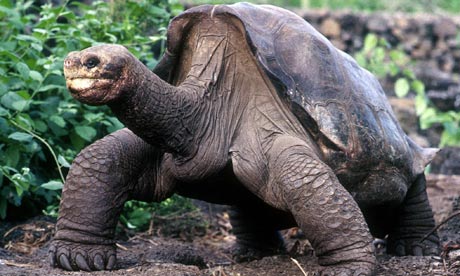
  In the first of my monthly wildlife news stories, which have caught my attention, there really is only one place to start. The sad news has very recently broken that Lonesome George, the last of the Pinata giant tortoises has died aged 100 making the species now officially extinct. Famous for his lack of interest in breeding despite repeated efforts to encourage him to do so, George was discovered by a park ranger on Sunday morning where it became clear his life cycle had run full circle. George was a huge attraction for tourists and became a symbol of the Ecuadorian Galapagos islands, which it was estimated had 180,000 visitors last year. After a post mortem to discover a cause of death, there are possible talks about embalming George's body to display in the Galapagos National Park for future generations to view. Surely a fitting tribute to an iconic and charismatic animal.
Visit the Telegraph online for the full story.


Image taken from http://static.guim.co.uk/sys-images/Guardian/Pix/pictures/2009/7/22/1248256019842/Lonesome-George-001.jpg.

I was recently pleased to read that a young Kenyan herder, Richard Turere, has devised a
possible solution that could well benefit both wildlife and people. By flashing LED lights around his livestock, he has for the past two years successfully deterred Lions from  predating on his cattle and other domesticated animals. Such is the success that he on  a personal level has had  that the idea is now being investigated on a greater scale to see if it has an impact on the number of clashes between people and wildlife. As it seems Lions associate lights around the cattle with activity and people, it would seem that not only do the lights restrict the Lions activity through fear of people, the lights also affect their night vision and so avoid lights whenever possible. There is a fear of Lions becoming habituated to this however with 100 of the country’s 2000 Lions being killed each year in acts of retribution by farmers because of lost live stock. It would seem this new deterrent could well become vital in the long run for both humans and Lions.


Image taken by author


And the third story that grabbed my attention today is a story which allows room for speculation. Costa Rica's Jaguars it has been discovered are rapidly changing prey preference to Green Turtles. Between the years of 2005 and 2010 it has been recorded that Jaguars killed 672 Green Turtles. At present it is unclear why this prey switch has happened.


Source BBC Wildlife July Edition.


                            Available at http://www.sciencephoto.com/image/387627/530wm/Z9340252-Jaguar-SPL.jpg

                            A brief thought from myself.

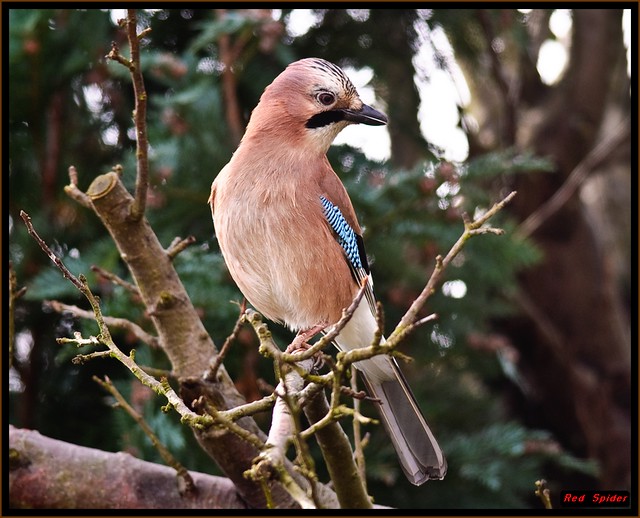
For the first time in a number of years I saw a Jay in the back garden of our home.  It is a strikingly beautiful bird which is becoming an all too rare sight. It really brought a smile to my face as it foraged for an estimated 20 minutes before moving off perhaps in search of a tastier meal. Perhaps a predator I had not seen had come into view, either way it was fantastic to see such a charismatic bird again after such a long absence.


Available at http://farm3.staticflickr.com/2743/4391407857_a09c437046_z.jpg?zz=1.

Bye for now George.

Tuesday, 12 June 2012

Living the Dream

Living the Dream

Everyone has dreams. There are sleep dreams and day dreams, hopes, desires and nonsense all wrapped together. No matter how unusual they may be everyone has them. On grey English winters mine has been visiting the beautiful country of South Africa. The wildlife of this country has always fascinated me, but one creature in particular captured my imagination more than any other. Watching documentaries it always seemed to me that the Cheetah had the most uncanny ability to disappear from view as quickly as it appeared slinking silently back into the undergrowth , only for it to come into view minutes later, at a full speed assault on some unwary victim. This time the antelope got away, and the Cheetah melted back into cover, leaving no evidence it was ever there just like a ghost. It was these elusive cats I continued to dream about as I nodded sleepily in my seat during the long flight to Johannesburg Airport.
On arriving in the African bush the point that you aren’t in every day normality any more is hammered home by wondering Impala Wildebeest while walking around every corner comes with the real possibility of starting some bewildered looking Warthogs seeking easy sources of food and sanctuary from the more nervy predators unwilling to follow the herbivores through the gap in the fence and come into contact with these strange two legged animals no matter how tempting the plump pigs are. Despite the best efforts to protect camp food, the cheeky Vervet monkeys will always find an open door to the food store. So with giraffes next door on the opposite side of the fence and Vervets in the trees we settled into our home for the next month. And by teatime it was quite apparent that falling under the magical spell of Africa was as natural as breathing, sleeping … and dreaming.
Anywhere else in the world a half past five start would frankly be unpleasant , however when the alarm went off and we leave for another days’ of survey work there is not a single complaint.
Over the course of the month the cold, still journeys to the early morning survey filled with sightings giraffe, elephant, rhino ( black and white), wild dog and lion to name just a few highlights. I always felt hugely grateful and privileged to see all these animals,t here was slight disappointment at no cheetah sightings.
Lie-ins were not regular, and by lie in we still were up by seven at the latest keen to take advantage of the amazing sights around us. It was on one such morning that the rest our larger group came back into camp restricted by unforeseen bad weather but surprisingly cheery for a group of people who had just experienced the not so fun elements of nature.I.  “We’ve seen cheetahs” we were told excitedly, “two brothers patrolling the reserve fence line”. Honestly I was delighted for the group , however secretly I was desperately envious of the guys lucky enough to see them . I knew my own mini group were scheduled back out into the bush in the next couple of days along that exact route my spirits lifted once more.
Back out into the bush and this particular morning there was something different in the air hard to explain. Maybe it was the light taking just that little bit longer to break through the darkness of night, still offering cover for animals of all sizes. A kudu a huge antelope, went almost unspotted by the side of the road camouflaged in its stillness, only movement brought the silhouette of the magnificent animal to us . Birds called, monkeys chattered it was another beautiful morning that could not fail to put a smile on faces, as a group of startled impala darted for cover. 
As we drove on towards our destination suddenly, silently a shape slunk about 50 meters from the car out of the cover of vegetation.  Strolling purposefully towards us my heart jumped as the stunning Cheetah came closer ever closer.  Its spots dappled in the early morning light, it appeared more than happy to put up with these excited strange observers. Better still the brother appeared again silently again majestically their agile bodies showing just how graceful they are, but also how vulnerable they are.

The cats continued to sit confidently in full view of us as we admired everything about them.  Every detail of their bodies I tried to take it, fascinated in their ability to have appeared without a sound almost ghostly. Their boldness was startling coming very close to the car so confident were they we were of no threat, despite this few words in the car were spoken, not through fear but through shear awe of the beautiful animals in front of us. Finally they decided we had seen enough and again slinked away soundlessly maybe it was time to hunt, maybe they were just bored of us. We were lucky enough to see the brothers on two more occasions but the thought I had when I first saw them will always stay with me, dreams are not for dreaming they are for living.
Take it easy
George.